The Underground • Midnight Exhale

Cannabis laws are changing across the country. Kansas, though, remains firmly in prohibition.
Across the country, the conversation around cannabis has changed. Some states have opened recreational markets, while others have created medical programs.
Crossing the Kansas state line, it’s a whole different story.
Neighboring Colorado has had a legal market for years now, and Missouri has a recreational market. Even Oklahoma, a well-known deep red state, has a medicinal program. In Kansas, cannabis remains illegal, and the laws around hemp-derived products are not so straightforward.
This is where hemp laws can get confusing.
Now, just because something is readily available in a shop doesn’t necessarily mean it is legal. And even if it’s legal in another state, that doesn’t mean you can buy it and bring it to Kansas.
So what’s the deal with Kansas?
Let’s dive in and take a look at current laws, medical cannabis, hemp-derived products, and the legal consequences in the Sunflower State.
1. Is Marijuana Legal in Kansas?
No. Marijuana is illegal in Kansas for both recreational and medical use. Kansas has not enacted a state medical cannabis program.
Under K.S.A. 21-5706, unlawful possession can result in a misdemeanor or felony offense, depending on prior convictions.
During past legislative sessions, particularly in 2025-2026, lawmakers have proposed legalization and reduced possession penalties. Unfortunately, none of these measures passed.
In the present-day climate of Kansas, cannabis remains heavily restricted for now and has not caught up with neighboring states.
2. Hemp, CBD, Delta-8, and THC Vape Products: What’s the Difference?
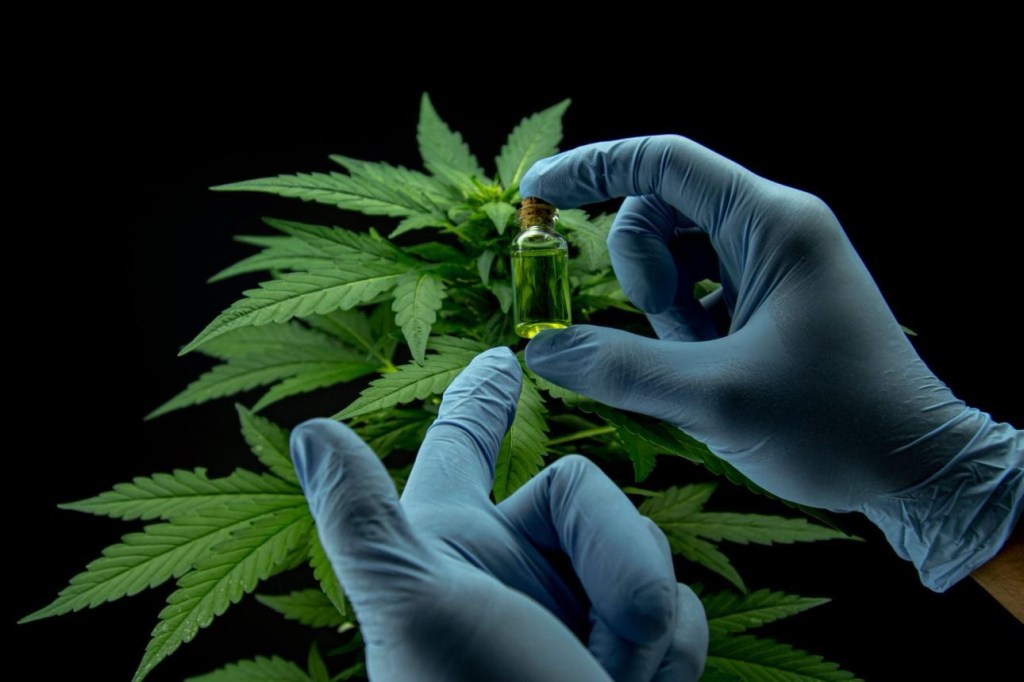
This is where things can get a little confusing among users in Kansas.
At smoke shops and convenience stores, you’ll see all kinds of products marketed as hemp-derived: CBD oils, gummies, Delta-8 products, and other cannabinoids.
Hemp isn’t automatically marijuana.
Kansas defines industrial hemp as not having more than 0.3% THC on a dry weight basis. Hemp products have a separate THC limit under Kansas law.
What about CBD?
Kansas doesn’t explicitly prohibit every CBD product solely because it contains CBD. However, the intended use, ingredients, product types, and regulations matter. A CBD label alone doesn’t mean it complies with Kansas law.
Is Delta-8 THC legal?
Delta-8 THC has been particularly confusing.
Kansas Attorney General Opinion 2021-4 discussed how the state’s controlled-substance and hemp laws apply to Delta-8 THC. But there has been an important legal development since that opinion: in State v. Williams, decided May 15, 2026, the Kansas Court of Appeals held that the hemp exception does not apply to THC-containing liquids, solids, or gases intended for use in vaporizing devices, even when the THC concentration is below 0.3%. This ruling is especially important for THC vape cartridges. It does not mean every hemp-derived product is automatically illegal; the product, its ingredients, intended use, and the law that applies all matter.
In practical terms, a product being marketed as hemp-derived does not make a THC vape cartridge lawful in Kansas. The court’s decision also shows why older summaries of the hemp rules need to be read alongside more recent case law.
The problem with hemp vape products
Kansas specifically lists certain products as prohibited if they are manufactured, marketed, or sold in the state.
The list is as follows:
- Cigars and cigarettes containing industrial hemp
- Hemp-containing chew, dip, and other smokeless products
- Teas containing industrial hemp
- Liquids, solids, or gases containing industrial hemp intended for use in vaping devices
Products being advertised as hemp-derived do not override these restrictions. The ingredients and intended use matter.
CBD, hemp, and Delta-8 are not interchangeable terms. And when it comes to figuring out whether a product is legal in Kansas, the label alone is not enough. The ingredients, intended use, statutes, and relevant court decisions all matter.
3. Does Kansas Have Medical Marijuana?
For individuals hoping for a medical marijuana program in Kansas, the answer remains no.
Kansas still does not have a medical cannabis program. Governor-elect Cindy Holscher has publicly supported cannabis legalization, including medical use, and is scheduled to take office in January 2027. That could change the political conversation, but an election or campaign position does not change the law. Any program would still require legislation and a workable regulatory system.
Have Kansas lawmakers tried changing cannabis regulations?
Yes. For years, Kansas lawmakers have discussed medical cannabis reform.
There were two notable legislative proposals during the 2025–2026 session:
- House Bill 2752: proposed creating patient and caregiver identification cards and establishing a Kansas medical cannabis agency.
- Senate Bill 294: proposed creating a regulated system for cultivation, distribution, and sales. This act was known as the Kansas Medical Act.
Both bills died during the legislative session. For advocates and patients who have followed the issue, it’s a reminder that introducing a bill and changing the law are two very different things.
4. What Are the Penalties for Marijuana Possession in Kansas?

Under K.S.A. 21-5706, the possession offense depends partly on an individual’s prior convictions. Here is how this statute breaks down:
First qualifying possession conviction
A first-time marijuana possession is generally a Class B non-person misdemeanor.
This classification can result in a maximum of:
- Six months in county jail
- A fine up to $1,000
These are not automatic sentences and depend entirely on the circumstances of the case and the court’s decision.
What happens to repeat offenders?
The consequences can increase:
- First conviction: Class B non-person misdemeanor
- Prior conviction: Class A non-person misdemeanor
- Two or more convictions: Drug severity level 5 felony
A Class A misdemeanor can come with one year in jail and a maximum fine of up to $2,500.
What about selling and distribution charges?
Kansas law differentiates possession, selling, and distribution of marijuana. Distribution charges can be the most severe, depending on the quantity and intent to distribute. The amount involved and the circumstances of the case can affect the severity of the charge.
Cultivation is addressed separately under K.S.A. 21-5705.
Did Kansas consider reducing possession penalties?
Yes, it did.
Senate Bill 295 proposed a $25 fine and replaced criminal penalties with a civil penalty. SB 295 did not advance out of committee during the 2025–2026 session.
If you’re dealing with an actual charge, the details matter. A qualified Kansas defense attorney can explain how the law applies to your situation.
5. Where Does Kansas Go From Here?
Across the country, the cannabis landscape is evolving, expanding its markets, revisiting penalties, and continuing to discuss what legalization should look like.
Kansas, though, is still taking a different road.
As of November 2026, both recreational and medical marijuana remain illegal in Kansas. The political picture may be shifting: Governor-elect Cindy Holscher has supported legalizing cannabis, while the proposals introduced in the 2025–2026 session did not become law. What happens next will depend on the Legislature and the work needed to put any new law into practice.
There is a lot of noise around the debate over cannabis legalization. Social media, headlines, product labels, and conversation can make it difficult to know what’s permitted and what isn’t.
That’s why it’s important to check the facts.
Kansas could eventually change course, especially with a new governor taking office in January. But for now, the law on the books is still the law Kansans have to follow.
The conversation isn’t over and neither is the story.
Stay curious. Question the noise. Keep looking deeper.
——————————————————
6. Sources, Research, and Editorial Disclaimer
Sources and further reading
This article was researched using Kansas statutes, official legislative records and government publications. The following primary sources are available for readers who want to explore the law themselves.
Kansas marijuana laws
- K.S.A. 21-5706 — Unlawful Possession of Controlled Substances
- K.S.A. 21-5705 — Unlawful Cultivation or Distribution
- K.S.A. 21-6602 — Classification of Misdemeanors and Terms of Confinement
- K.S.A. 21-6611 — Criminal Fines
Hemp and cannabinoid products
- K.S.A. 2-3901 — Commercial Industrial Hemp Act and Definitions
- K.S.A. 2-3908 — Unlawful Hemp Products
- Kansas Attorney General Opinion 2021-4 — Delta-8 THC
- State v. Williams (Kan. Ct. App. 2026) — THC vape cartridges and the hemp exception
Medical cannabis and legislative proposals
- Kansas House Bill 2752 — Medical Cannabis Proposal
- Kansas Senate Bill 294 — Kansas Medical Cannabis Act Proposal
- Kansas Senate Bill 295 — Personal-Use Possession Penalty Proposal
- Kansas House Bill 2354 — Out-of-State Medical Card Proposal
- KCUR interview — Cindy Holscher on cannabis legalization
Editorial Disclaimer
Midnight Exhale is an independent publication covering cannabis culture, underground stories, vaping and alternative lifestyles.
This article is intended for general educational and informational purposes. It is not legal advice, medical advice or a recommendation to purchase, possess or consume cannabis or cannabis-derived products.
Cannabis laws can change, and individual circumstances can affect how a law applies. The information in this article reflects the sources reviewed as of November 14, 2026. Readers should consult current official government resources or a qualified legal professional for guidance about their own circumstances.
About Midnight Exhale
Beyond the headlines. Beyond the expected. A closer look at cannabis culture and the stories surrounding it.
Stay curious. Question the noise.

